PhD candidate in statistics at the University of Ljubljana
Interests : Economy Digital
Countries : Italy Slovenia

Fabio Ashtar is a PhD candidate in statistics at the University of Ljubljana (Slovenia) researching network methods for the analysis of international trade. He completed his BA in Political Science and International Relations at the University of Naples "l'Orientale" (Italy) and holds a Joint MA in Southeastern European Studies from the universities of Graz (Austria) and Belgrade (Serbia).
His main interestes are international economics and economic policy, with a focus on heterodox models and computational methods (inc. network analysis,machine learning, and AI). Also, his work in the field of computational methods in the humanities has been financed by the Bulgarian ministry of Science and Education and the Holy See.
PhD in History from the University of Paris 1 Panthéon-Sorbonne
Interests : Democracy History
Countries : France Italy

Francesco holds a PhD in History from the University of Paris 1 Panthéon-Sorbonne. He served as a teaching assistant in early modern history at the same university between 2022 and 2024. After completing his studies in Italy, he pursued visiting research opportunities in India, Germany, the United States, and the United Kingdom. These experiences abroad strengthened his belief in the importance of the international dimension of progressive values.

His PhD dissertation examines the legal mechanisms employed by the Venetian Republic to combat forgery and perjury. Alongside his doctoral research, he has also explored how Venice grappled with urban abandonment and unsanitary housing. These academic interests have led him to engage with present-day challenges.

A member of the Progressive Historians Network, Francesco believes that historical knowledge has a direct role to play in shaping policies. He joined the Young Academics Network (YAN) to contribute to initiatives on sustainable housing renovation and just transition.

Moreover, he is currently investigating how deepfakes pose new challenges to authenticity, evidence, and institutional trust in today’s AI era. He has also published on a wide range of topics including overtourism, gender parity in education, and French elections.

Publications
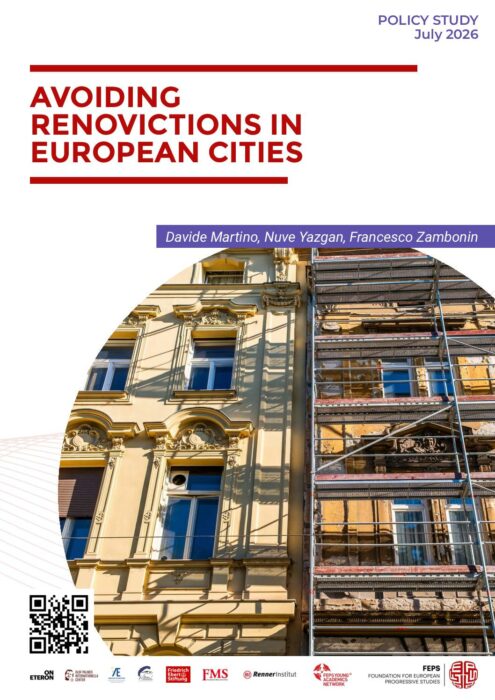
Avoiding Renovictions in European Cities

Europe faces a dual challenge: the climate crisis and a persistent housing crisis, both of which converge in the urgent need to renovate aging urban housing stock. While energy-efficient renovations are essential to meet EU carbon-neutrality targets by 2050, they risk triggering “renovictions”, the displacement of vulnerable residents due to rising rents and property values. This policy study shows how these renovictions can be avoided.

This policy study summarise the scientific literature and survey best practices and cautionary tales from three cities across Europe: Amsterdam; Athens; and Paris. These are three large capitals, with historic centres protected by heritage status and facing the pressure of (over)tourism.

Read the Policy Study

Academic Mentor: Eunice Goes, Professor of Politics at Richmond University in London
Political Mentor: Andreas Schieder, Member of the European Parliament and S&D Coordinator of HOUS Sub Committee

Members
Postdoctoral Fellow at the Université Libre de Bruxelles
Interests : Climate History
Countries : Belgium
PhD in History from the University of Paris 1 Panthéon-Sorbonne
Interests : Democracy History
Countries : France Italy
PhD. Research Contracts Associate in Research Services at the University of Oxford
Interests : Democracy EU external relations
Countries : United Kingdom
Publications
20/07/2026

Avoiding renovictions in European cities

FEPS YAN papers 9th cycle
Ph.D. Researcher and Lecturer of EU law at Maastricht University
Interests : Democracy Gender Equality
Countries : Belgium Italy

Alessandro Marcia (He/Him) is a Ph.D. Researcher and Lecturer of EU law at Maastricht University. His research focuses on LGBTIQA+ rights’ protection under EU law. Alessandro holds a Master’s Degree in Law from the University of Bologna and an LL.M. in EU law from Université libre de Bruxelles. Before joining UM, he served as a Lecturer of EU law at the China – EU School of Law, based at the University of Hamburg. Alessandro is also an activist for European integration and LGBTIQA+ rights. He is a member of the Global LGBTQI+ Changemakers Network established by the Carr-Ryan Center for Human Rights at Harvard University. He also runs the newsletter Europe and LGBTIQA+ Rights.

Publications
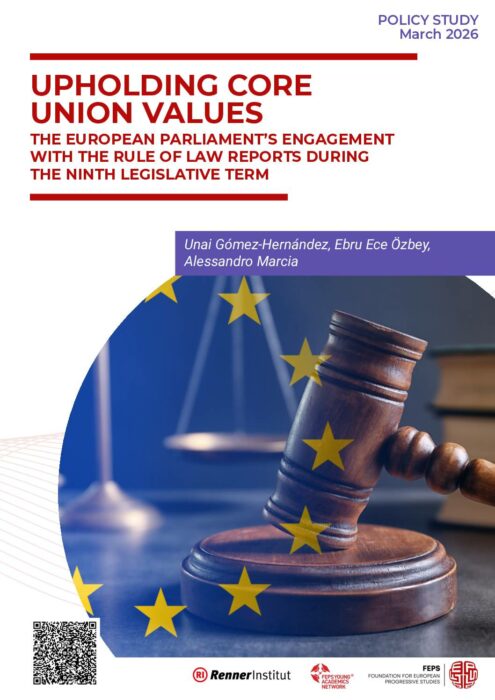
Upholding core Union values. The European Parliament’s engagement with the Rule of Law Reports during the ninth legislative term

This policy study analyses how the European Parliament (EP) has engaged with the European Commission’s Rule of Law Reports (RoLRs) during the ninth legislative term (2019-2024). It also examines what this engagement reveals about the EP’s understanding of the rule of law and its capacity to strengthen EU-level democratic safeguards.

Drawing on a qualitative analysis of parliamentary resolutions, debates and voting patterns, the policy study examines whether the EP approaches the rule of law primarily as a procedural-legal standard or as a broader normative principle encompassing fundamental rights, equality and democratic inclusion.

Read the Policy Study

Academic Mentor: Felix Butzlaff, political scientist and postdoctoral fellow at the Central European University Vienna
Political Mentor: Juan Fernando López Aguilar, S&D Coordinator LIBE Committee

Members
Ph.D. Researcher and Lecturer of EU law at Maastricht University
Interests : Democracy Gender Equality
Countries : Belgium Italy
Doctoral researcher in Comparative Politics and a lecturer at the University of Cologne
Interests : Democracy Foreign Affairs
Countries : Germany United Kingdom Turkey

Joint PhD at the University of Edinburgh and KU Leuven

Interests : Democracy Foreign Affairs Inequality
Countries : Belgium Spain United Kingdom
Publications
17/03/2026

Upholding core Union values. The European Parliament's engagement with the Rule of Law Reports during the ninth legislative term

FEPS YAN papers 9th Cycle
PhD candidate in Transnational Governance at the Scuola Normale Superiore and the Scuola Superiore
Interests : Gender Equality EU external relations
Countries : Italy Mexico

Isabel Hernandez Pepe is a PhD candidate in Transnational Governance at the Scuola Normale Superiore and the Scuola Superiore Sant’Anna. Her work explores how feminist foreign policy plays out in practice, and why progressive ideas often collide with power hierarchies and institutional routines. With a transnational background between Europe and Latin America, Isabel engages closely with policymakers, diplomats, and feminist activists, and cares about connecting research, policy, and real political struggles. She holds a B.A. in Global and Latin American Studies (summa cum laude) and an M.A. in International Public Affairs (cum laude).

Publications
Take care, seriously. A guide to mainstreaming care in policies

In the European Union (EU) context, in recent years, ‘care economy’ has become a buzzword, not least thanks to the efforts of social democratic actors. With the adoption of the European Care Strategy in 2022, the EU consolidated its role as a particularly powerful actor in social protection of care work.

With this policy study, the authors seek to bring the discussion of care and policy back from its limited, limiting demarcation as a ‘care economy’ to its origins in feminist thought.

The authors briefly discuss feminist scholarship on the ethics of care, introduce the concept of a ‘care society’ and contrast it with the concept of a ‘care economy’.

The academics propose a guiding framework for analysing a policy from a care perspective. This framework can be applied to a policy in any policy domain and at any policy level.

Read the Policy Study

Political Mentor: Idoia Mendía, S&D Member of the European Parliament

Members
PhD candidate in Transnational Governance at the Scuola Normale Superiore and the Scuola Superiore
Interests : Gender Equality EU external relations
Countries : Italy Mexico
Postdoctoral researcher at the University of Gothenburg
Interests : Foreign Affairs Gender Equality
Countries : Poland Sweden
Publications
17/03/2026

Take care, seriously. A guide to mainstreaming care in policies

FEPS YAN papers 9th Cycle
PhD in Political Philosophy from the Sofia University Saint Kliment Ohridski. Postdoctoral researcher at the CEU Democracy Institute
Interests : EU external relations Migration
Countries : Hungary Italy

Francesco Trupia is Adjunct at the Nicolaus Copernicus University in Toruń, and postdoctoral researcher at the CEU Democracy Institute in Budapest. His research focuses on the intersections of democracy, memory politics and minority groups in Southeast and Eastern Europe. After obtaining his PhD in Political Philosophy from the Sofia University Saint Kliment Ohridski, he has conducted his postdoctoral research at the Centre for Migration Research at the University of Warsaw, the Centre of Political History at the University of Antwerp, and at Humboldt University in Berlin. Francesco has also worked as a policy analyst for the Institute of European Democrats in Brussels, the Kosovo Foundation for Open Society in Pristina, the Caucasus Resource Research Centre in Yerevan. He is the author of “Islamophobia in European Cities: Solidarities, Responses and Dilemmas for Young Balkan Muslims” (Routledge 2025), “The Balkans and Palestine: Old Frictions, New Convergences” (Palgrave 2025) and “Rethinking Subalternity in Central-East Europe” (Transnational Press London).

Publications
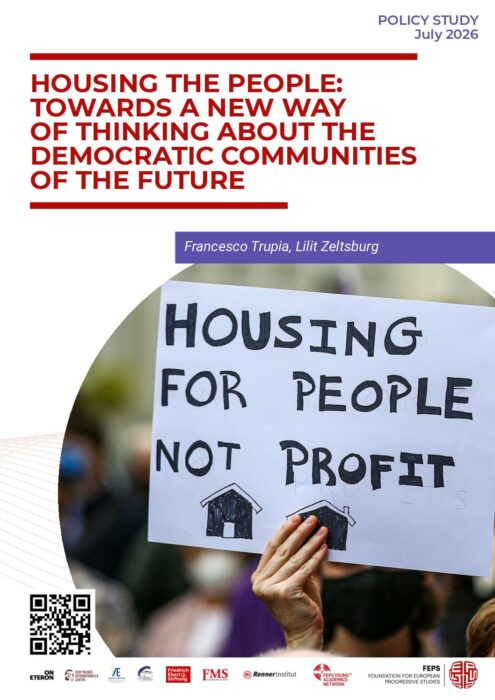
Housing the people: towards a new way of thinking about the democratic communities of the future

This policy study highlights the intersection of gentrification and the rise of the far right in gentrified and contested cities, departing from the observation that the current housing crises play a critical role in the rise of far-right sentiments in urban areas. It explores how broader urban challenges facing the EU are played out at the junction of gentrification, socio-economic inequalities and social fragmentation. 

These dynamics have disproportionately impacted marginalised communities by shrinking their spaces of political participation while simultaneously creating fertile ground for support for far-right actors. 

To address these issues, the policy study advocates for local, national and European Union level policy interventions aimed at counteracting the adverse effects of gentrification, improving the availability and accessibility of housing, and revitalising communities.

Read the Policy Study

Academic Mentor: Carlo D'Ippoliti, professor of political economy at Sapienza University of Rome
Political Mentor: Irene Tinagli, Member of the European Parliament and Chair of the EP HOUS Sub Commitee

Members
PhD in Political Philosophy from the Sofia University Saint Kliment Ohridski. Postdoctoral researcher at the CEU Democracy Institute
Interests : EU external relations Migration
Countries : Hungary Italy
Researcher and policy advisor
Interests : Democracy Social Europe
Countries : Netherlands
Publications
20/07/2026

Housing the people

FEPS YAN papers 9th cycle
PhD cum laude in Political Science and Sociology from Scuola Normale Superiore
Interests : Climate Democracy Disinformation
Countries : Italy

Maria Chiara Franceschelli is a researcher and analyst working on environmental governance, political participation and social movements in authoritarian and/or pressured contexts, with additional expertise on Eastern Europe and Russia. She holds a PhD cum laude in Political Science and Sociology from Scuola Normale Superiore (Florence, Italy), where she researched environmental governance and collective action in Russia’s peripheral regions. She regularly works with think tanks and institutions, striving to connect policy and research. She firmly believes in universal access to specialised knowledge and consistently engages in the dissemination of scientific research to general audiences in Italian and international media.

Publications
Truth in transition. A toolkit for countering climate misinformation

The increasing spread of misinformation has become a significant challenge to the implementation and public reception of EU policies, particularly in climate-related areas. This policy study explores the intersection of misinformation and policy communication, focusing on the Common Agricultural Policy. 

The study aims to investigate how misinformation shapes public perceptions and resistance to climate policies and to develop strategic recommendations for more effective policy communication. Utilising case study analysis, the research will provide actionable insights for EU policymakers.

Read the Policy Study

Political Mentor: Alex Agius Saliba, Member of the European Parliament and Vice President of S&D Group

Members
PhD researcher at Maastricht University. Secretary General of the Young European Federalists (JEF Europe).
Interests : Economy Democracy Digital
Countries : Belgium Greece
PhD cum laude in Political Science and Sociology from Scuola Normale Superiore
Interests : Climate Democracy Disinformation
Countries : Italy
PhD student at Ludwig-Maximilians-University Munich
Interests : Democracy Disinformation
Countries : Germany
Publications
20/07/2026

A toolkit for countering climate misinformation

FEPS YAN papers 9th cycle
PhD candidate in Economics at KU Leuven
Interests : Economy Democracy
Countries : Belgium Italy

After a short experience in the banking sector, both private and central bank, he returned to academia to pursue research. He holds a Master of Research in Economics from Sciences Po Paris and he is currently a fourth-year PhD candidate in Economics at KU Leuven, Belgium. His work lies in Political Economy. He mainly studies how socio-economic factors shape electoral dynamics, including support for extremist parties, and how Italian organized crime influences political selection and outcomes. His research combines quantitative analysis of recent electoral behaviour in Belgium with a long-run historical perspective on Italy.

Publications
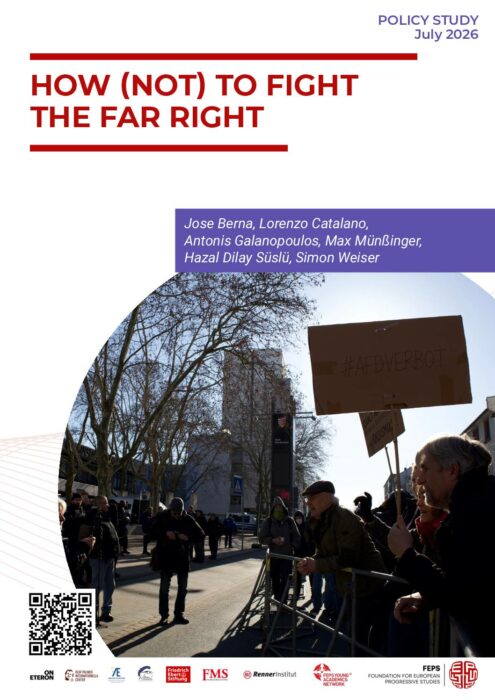
How (not) to fight the far right

This policy study investigates the strategies employed by European social democratic parties in response to the rise of far-right political parties since the 2010s. By building on well over 100 academic studies, we draw clear strategic implications for progressive actors facing far-right competition. 

After looking at scientific research on how to fight the far right, a minimum of three strategic orientations emerge:
1)         Social democrats must systematically understand why far-right narratives resonate – examining social grievances, emotions and discursive strategies – without adopting far-right frames.
2)         They must reclaim agenda-setting power by foregrounding areas of long-standing credibility – notably, welfare, redistribution and economic justice – and by refusing debates imposed on far-right terms.
3)         Social democrats need a positive, forward-looking vision that combines an inclusive collective identity with a credible agenda for economic equality, reconnecting policy with collective emotions.

Read the Policy Study

Academic Mentor: Daphne Halikiopoulou, Professor of Comparative Politics at University of Reading
Political Mentor: Mathias Ecke, S&D MEP of the European Parliament

Members
PhD in Political Science from Aristotle University of Thessaloniki. Political researcher at Eteron
Interests : Democracy Policy
Countries : Greece
PhD Candidate University of Surrey
Interests : Democracy EU external relations
Countries : United Kingdom Turkey
PhD in Media, Communication and Culture at the Universitat Autònoma de Barcelona
Interests : Democracy Policy
Countries : Spain
PhD candidate in Economics at KU Leuven
Interests : Economy Democracy
Countries : Belgium Italy
Research associate and PhD candidate at FAU Erlangen-Nuremberg
Interests : Democracy Policy
Countries : Germany
PhD candidate at Ludwig-Maximilians-University Munich
Interests : Democracy Foreign Affairs
Countries : Germany
Publications
22/07/2026

How (not) to fight the far right

FEPS YAN papers 9th cycle

Researcher at the Department of Political and Social Sciences at the European University Institute (EUI)

Interests : Economy Inequality
Countries : France Italy

Robin Huguenot-Noël is a researcher at the Department of Political and
Social Sciences at the European University Institute (EUI) in Florence.
His research mainly focuses on the governance of employment and
social policies in the EU.

Trained in economics and political science, he worked between 2014
and 2020 as policy advisor to the UK Treasury, the German co-operation
and development agency (GIZ), and the European Policy Centre (EPC).
He also published several reports for the European Commission, the
Council and the Parliament on the EU budget, cohesion policy, and
welfare reforms in the EU.

His work has featured in various academic journals, including the
Journal of European Public Policy (JEPP), the Journal of European
Social Policy (JESP), Transfer: European Review of Labour and
Research. He is the co-author of the book Resilient Welfare States in
the European Union - In Search of Capacitating Solidarity, written with
Anton Hemerijck, and published with Agenda Publishing in 2022.

Publications
Tightening welfare belts again?

To what extent do EU fiscal rules constrain governments' social and labour market spending? Exploring the critical cases of France and Italy, this policy study gathers evidence from two decades of interactions between national welfare priorities and EU fiscal rules and, through this comparison, sheds light on the mechanisms underlying recent recalibrations and what it means for the Social Pillar implementation.

Read the policy study

Political Mentor: Jonás Fernández, MEP S&D
Academic Mentor: Carlo d'Ippoliti, Associate professor of political economy at the Department of Statistical Sciences of Sapienza University of Rome.

Members
Publications
03/03/2026

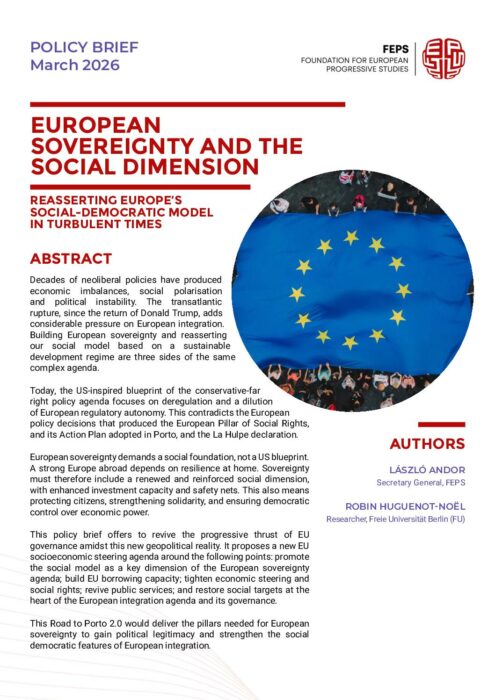
European sovereignty and the social dimension

Reasserting Europe’s social-democratic model in turbulent times
14/05/2024

Tightening welfare belts again?

FEPS YAN Series
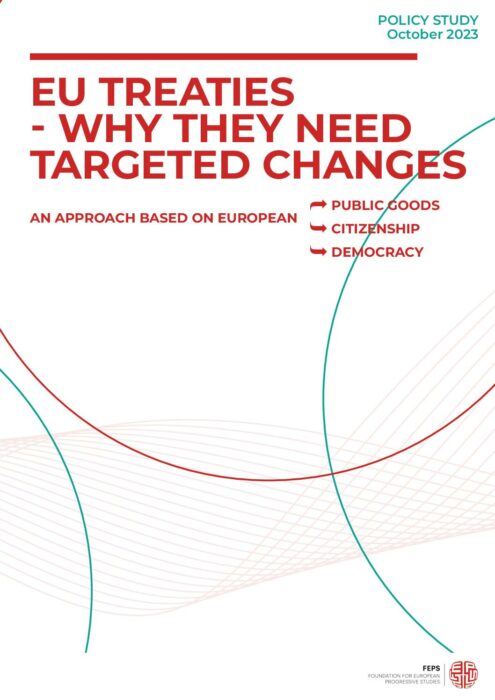
13/11/2023

EU Treaties - Why they need targeted changes

An approach based on European public goods, citizenship and democracy
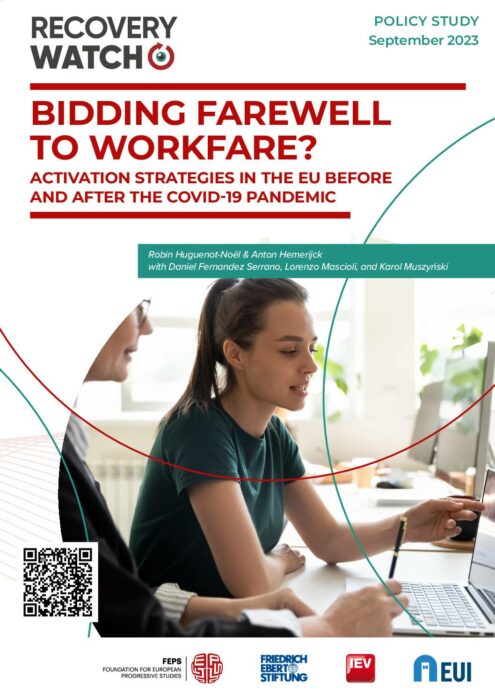
01/09/2023

Bidding farewell to workfare?

Recovery Watch series
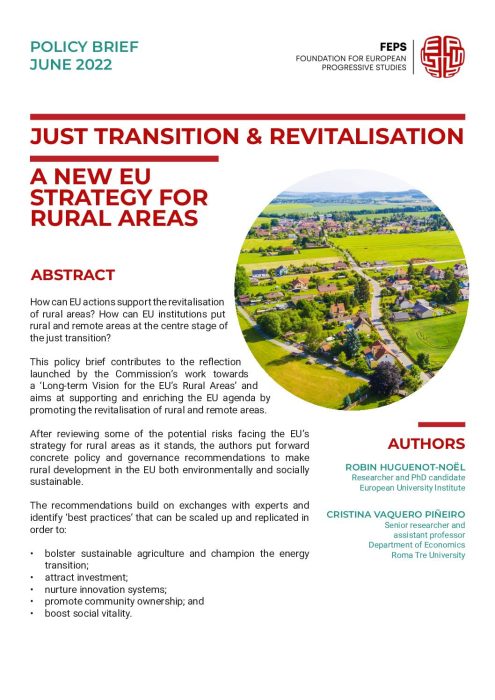
13/06/2022

A new EU strategy for rural areas

Just Transition & Revitalisation
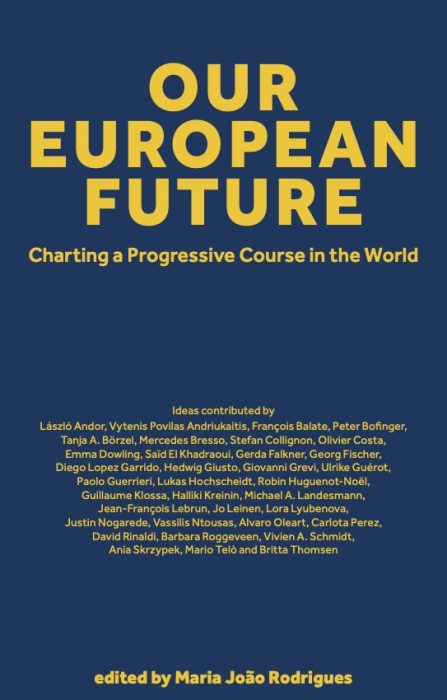
27/05/2021

Our European Future

FEPS contribution to the Conference on the Future of Europe
31/01/2020

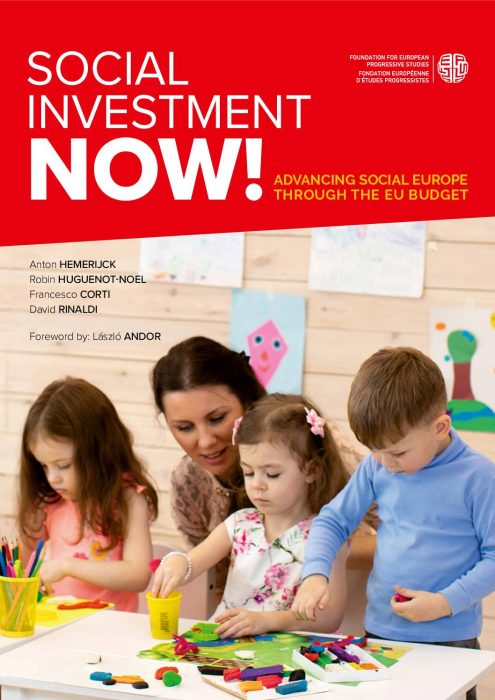
Social Investment Now! Advancing Social EU through the EU Budget

Doctoral Researcher in Urban Planning, Design, and Policy at the Department of Architecture and Urban Studies of the Polytechnic University of Milano

Interests : Economy
Countries : Italy

Alberto Bortolotti is a doctoral researcher in Urban Planning, Design, and Policy at the Department of Architecture and Urban Studies of the Polytechnic University of Milano. His research focuses on the interactions between spatial planning and real estate finance with implications in urban development, cohesion policy, and housing studies. He has been a visiting scholar at the Public Governance Institute of KU Leuven and the Department of Human Geography, Planning, and International Development of the University of Amsterdam. Before joining the academic environment, he worked as a junior architect, planner, policy advisor, and researcher, for both public and private institutions such as the Italian Ministry of Culture, the European Parliament, and the Feltrinelli Foundation. He is a social-democratic activist and Vice-President of the Young European Socialists (YES).

Publications
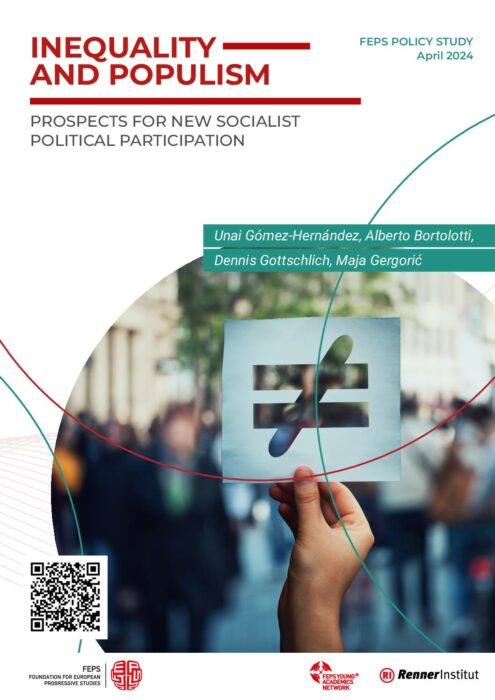
Inequality and populism

In recent years, European citizens have witnessed a rise in inequality, especially socio-economic, alongside an increase in vote share for radical right populist parties. By examining case studies from Italy, Hungary, and Spain (with the comparative case of Germany), this policy study argues that the rise of populism is not only linked to economic trends but also to other constitutional changes and institutional settings characterising European countries with a focus on economic inequality as the explanatory variable for political participation.

Read the Policy Study

Political Mentor: Gaby Bischoff, MEP S&D
Academic Mentor: Eunice Goes, Professor of Politics at Richmond American University of London

Members

Joint PhD at the University of Edinburgh and KU Leuven

Interests : Democracy Foreign Affairs Inequality
Countries : Belgium Spain United Kingdom
Publications
15/05/2024

Inequality and populism

FEPS YAN Series

Affiliated Postdoctoral Researcher in the Horizon projects ActEU and PUSH*BACK*LASH

Interests : Gender Equality Economy
Countries : Italy

Matilde Ceron completed her PhD in Political Studies at the University of Milan (NASP). Her dissertation investigated the multilevel interplay between the EU fiscal framework and domestic political, institutional and economic factors in shaping the composition of public expenditures in the Member States. Matilde holds an MSc in Economics and Social Sciences from Bocconi University and an MA in Public Policy Analysis from the College of Europe. Her research interest clusters at the intersection of EU economic governance, fiscal policies, gender equality and representation. 

She was a postdoctoral fellow in political economy at the University of Pavia, working on the digital inclusion of persons with disabilities. During her postdoctoral fellowship at Luiss University, her research focused on the policy-making and legitimacy implications of EU executive leadership selection, co-editing a forthcoming book “The Politicisation of the European Commission’s Presidency Spitzenkandidaten and Beyond”. As a Max Weber Fellow at the Robert Schuman Center for Advanced Studies of the European University Institute, she extended her research on national and EU emergency and recovery responses to the pandemic addressing the changes in fiscal policies and governance frameworks after Covid-19. In parallel, she expanded her work to a gendered analysis of EU economic governance with a focus on pandemic recovery policies. Her current project focuses on substantive representation and gender mainstreaming in the National Recovery and Resilience Plans. She is an affiliated postdoctoral researcher in the Horizon projects  Activating European citizens’ trust in times of crises and polarization (ActEU) and anti-gender backlash & democratic pushback (PUSH*BACK*LASH), where she will continue to work on gender equality policies, Covid-19, representation and legitimacy.

Publications
Tightening welfare belts again?

To what extent do EU fiscal rules constrain governments' social and labour market spending? Exploring the critical cases of France and Italy, this policy study gathers evidence from two decades of interactions between national welfare priorities and EU fiscal rules and, through this comparison, sheds light on the mechanisms underlying recent recalibrations and what it means for the Social Pillar implementation.

Read the policy study

Political Mentor: Jonás Fernández, MEP S&D
Academic Mentor: Carlo d'Ippoliti, Associate professor of political economy at the Department of Statistical Sciences of Sapienza University of Rome.

Members
Publications
14/05/2024

Tightening welfare belts again?

FEPS YAN Series